
Moving to Raleigh: The Ultimate Guide
Raleigh continues to rank among the top places to live in the country, drawing remote workers, families, students, young professionals, and retirees alike. With a growing tech economy, diverse neighborhoods, excellent schools, award-winning parks, and a low cost of living compared to major metros, it’s no surprise the Raleigh area grows by more than 60 new residents daily.
This guide gives you the full picture of what life here is really like — and what to expect when moving to Raleigh.
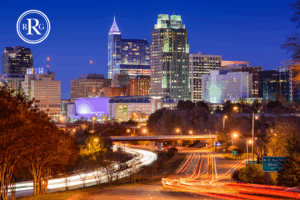
Raleigh offers a rare combination of rapid economic expansion and livable charm. With a strong job market, thriving food and brewery scene, dozens of parks, and low crime compared to similar-sized cities, it appeals to a wide range of newcomers.
Top 5 Best Places to Live (U.S. News & World Report)
Major tech + biotech hub (Apple, Red Hat, SAS, Epic Games)
45+ miles of greenway trails
Close proximity to the beach & the mountains
Lower cost of living vs. D.C., NYC, Boston, California
Read More:
Learn about the closest beaches to Raleigh → Read: Closest Beaches to Raleigh, NC (RRG Blog)
Raleigh is more affordable than other east-coast tech markets, but home prices have risen in recent years due to demand.
Median home price (Wake County): ~$450,000
Average rent (1BR): $1,350
Average utilities: $160–$220
Groceries: Slightly below national average
Income tax: Flat 4.5% (NC statewide)
Current Home Prices:
See current Raleigh homes for sale → New & Featured Listings
Raleigh’s neighborhoods are diverse, each with their own character, price points, and amenities. Here are several favorites among first-time buyers and relocators.
Upscale, walkable, and loaded with restaurants, gyms, and boutiques. Popular with professionals.
Historic charm, tree-lined streets, and excellent access to breweries + coffee shops.
Victorian homes, local history, downtown proximity, and great community events.
Modern, centrally located, larger homes and growing retail districts.
Affordable, up-and-coming, great for first-time buyers.
Top-rated schools, suburban feel, family-friendly.
Explore the Neighborhoods:
See the full Best Neighborhoods for First-Time Buyers → (RRG Blog)
Get Matched with your perfect neighborhood → Raleigh Neighborhood Match Quiz
Wake County Public School System is one of the largest and highest-performing in the nation, offering:
Traditional base schools
Magnet programs
Year-round options
Charter & private alternatives
Higher Education Nearby:
NC State University
Duke University
UNC Chapel Hill
Meredith College
Shaw University
Coming Soon: RRG’s Full Wake County Schools Guide.
The Triangle is one of America’s most dynamic job markets.
Technology
Biotech & pharmaceuticals
Education
Research
Healthcare
Startups
Apple
IBM
Cisco
Epic Games
Red Hat
Duke Health
SAS
This growth keeps Raleigh’s unemployment rate consistently below the national average.
Raleigh has all four seasons without extremes.
Winter: 40s–50s
Spring: 60s–70s (beautiful)
Summer: 80s–90s (humid)
Fall: 60s–70s (peak season)
Snow is rare, beach trips are easy, and fall weather is a local favorite.
Raleigh is a car-friendly city with improving transit options, easy regional access, and a layout that makes many daily errands (work, school drop-off, groceries, gym) relatively straightforward compared to larger metro areas. For many people relocating to Raleigh, “How bad is traffic?” is a top question, and the practical answer is: commutes are typically manageable, especially if you choose a neighborhood that fits your work location.
Many residents commute between:
Downtown Raleigh
North Hills / Midtown Raleigh
Research Triangle Park (RTP)
RDU Airport
Cary, Morrisville, Apex, and Wake Forest
Raleigh’s road network (including I-40, I-440, US-1, and the 540 loop) gives buyers flexibility when choosing neighborhoods based on commute time and lifestyle.
If you prefer alternatives to driving, the Triangle continues to invest in transit improvements. GoTriangle’s Wake Transit plan supports expanded service and includes routes connecting Downtown Raleigh, NC State, RDU Airport, and the Regional Transit Center, with some frequency increases noted on Route 100. GoTriangle
The Wake Transit program also includes planning and development of Bus Rapid Transit corridors designed for more frequent service and upgraded stations. GoTriangle
One of the biggest reasons Raleigh ranks highly on national “best places to live” lists is lifestyle: parks, trails, cultural institutions, food, and weekend access to both the coast and the mountains. Raleigh is a city where you can work a full day and still squeeze in a greenway run, museum visit, or patio dinner.
Raleigh’s Capital Area Greenway system includes over 100 miles of trails across dozens of individual trail segments, making it one of the city’s signature amenities. Raleigh NC
This matters for everyday life and real estate decisions: buyers often prioritize greenway access, walkable parks, and nearby recreation when choosing Raleigh neighborhoods.
Raleigh’s cultural anchors include major museums, performing arts venues, and a steady calendar of festivals and food events. For newcomers, this is part of what makes living in Raleigh feel both energized and comfortable.
Umstead State Park
Pullen Park
Neuse River Greenway
Transfer Co. Food Hall
NC Museum of Art
Concerts at Red Hat Amphitheater
2 hours → Wrightsville Beach
3 hours → Asheville & the mountains
3–4 hours → Outer Banks
2.5 hours → Charlotte
Read: Top Day Trips from Raleigh and Closest Beaches to Raleigh, NC (RRG Blog)
The Raleigh housing market (and Wake County more broadly) remains competitive, but conditions have shifted in ways that can benefit prepared buyers, especially first-time buyers who want long-term stability.
Recent market reporting shows Wake County’s median sale price around $480,000 (example: October 2025) with homes selling in roughly weeks, not months, though days-on-market can fluctuate with seasonality and rates. Redfin
Zillow’s Wake County data also puts the average home value around $474,088, reflecting how the market can vary by methodology and time window. Zillow
If you’re searching:
“Raleigh housing market 2025”
“Wake County home prices”
“Is Raleigh a good place to buy a house?”
…you’re likely trying to time the market. The more reliable strategy is to buy based on budget fit, neighborhood fit, and time horizon, not perfect rate timing.
Buyer advantages we’re seeing more often:
More negotiation room on select listings (depending on price band)
Greater importance of pre-approval quality and underwriting
Better results for buyers using a clear neighborhood strategy (commute + lifestyle + resale)
Download our Buyer’s Guide for more information on buying a house in Raleigh.
This is one of the most important decisions for anyone relocating to Raleigh, NC, and it’s also where Raleigh stands out compared to many U.S. markets: the city combines a strong job base, quality of life, and ongoing demand that supports long-term home value.
Renting can make sense if you need flexibility while you learn the area, change jobs quickly, or prefer lower upfront costs.
Pros
Flexibility to move neighborhoods easily
Lower upfront costs than buying
Cons
Rent increases over time
Less control over the home
No equity building
Buying can be a major advantage in Raleigh because the area continues to attract new residents, employers, and investment, which supports stable demand over time.
Pros
Equity and long-term wealth building
Ability to customize and improve your home
More options in neighborhood choice and property type
Cons
Higher upfront costs
Maintenance responsibility
Market competition in some price ranges
Raleigh is frequently recognized for livability and quality of life, and those rankings matter because they reflect the same forces that drive demand: jobs, safety trends, amenities, and overall desirability. For example, the Greater Raleigh Chamber’s compiled rankings note Raleigh as #5 Best Place to Live for Quality of Life (U.S. News & World Report, May 2024). Greater Raleigh Chamber of Commerce
The City of Raleigh also maintains an “Accolades” page tracking external recognition, which can be useful for understanding how the city is perceived nationally. Raleigh NC
When people ask, “Why is Raleigh a top place to move?” the practical real estate answer is: demand follows opportunity. When demand stays consistent, homeowners tend to benefit from:
Strong resale activity
Better long-term appreciation potential than markets losing population
More liquidity when it’s time to move up, downsize, or relocate
Helpful Links for Buyers:
If you’re relocating to Raleigh, a simple checklist can remove most of the friction. The key is to plan around school timelines (if relevant), your commute, and how quickly you want to settle into a neighborhood.
Choose your target area: Downtown Raleigh, North Hills, Five Points, Midtown, Cary, Apex, etc.
Decide whether you want to rent first or buy immediately
If buying, get a strong pre-approval (ideally underwritten) and define your must-haves
Start gathering documents (pay stubs, W-2s, bank statements) for lending
Book movers and confirm delivery windows
Set up utilities and internet
Schedule any needed home services (HVAC servicing, cleaning, locksmith, etc.)
If you’re buying, confirm inspection timelines and closing steps
Confirm keys, access codes, and closing documents
Pack essentials separately (meds, chargers, important paperwork, pet supplies)
Plan your first grocery run and basic setup
Do a neighborhood orientation: parks, grocery stores, coffee, gyms
Test your commute at the times you’ll actually drive it
Walk or bike the nearest greenway segment (one of the fastest ways to “feel local”) Raleigh NC
If you have kids, confirm school routes and any program deadlines
Moving to Raleigh is a major transition — and the right local expert makes all the difference. Rich Realty Group has helped hundreds of families and professionals relocate smoothly, confidently, and with clarity.
👉 Contact us today:
https://richrealtygroup.com/contact
👉 Browse current homes for sale:
https://richrealtygroup.com/listings
👉 Download the Buyer’s Guide:
https://richrealtygroup.com/buyers-guide
Rich Realty Group brings deep local expertise to Raleigh’s most sought-after neighborhoods, including Five Points, North Hills, Midtown, Glenwood South, and the broader downtown and ITB (Inside the Beltline) market, along with the surrounding Triangle area. Whether you’re searching for a single-family home, townhome, condo, luxury homes, new construction, or an investment property, our real estate agents’ neighborhood-level insight and decades of combined experience help buyers, sellers, and builders navigate Raleigh’s evolving market with confidence. As the city’s profile continues to rise, having a real estate team that knows these neighborhoods block by block makes all the difference.